Monte Carlo for discretionary zone and event traders
Understand what resampling closed trades can reveal about losing runs, account pressure, and sizing assumptions when your entries depend on zones or events.
Read article →Stratifyre blog
Practical guides to building, testing, and automating strategies across crypto, equities, and futures.
Understand what resampling closed trades can reveal about losing runs, account pressure, and sizing assumptions when your entries depend on zones or events.
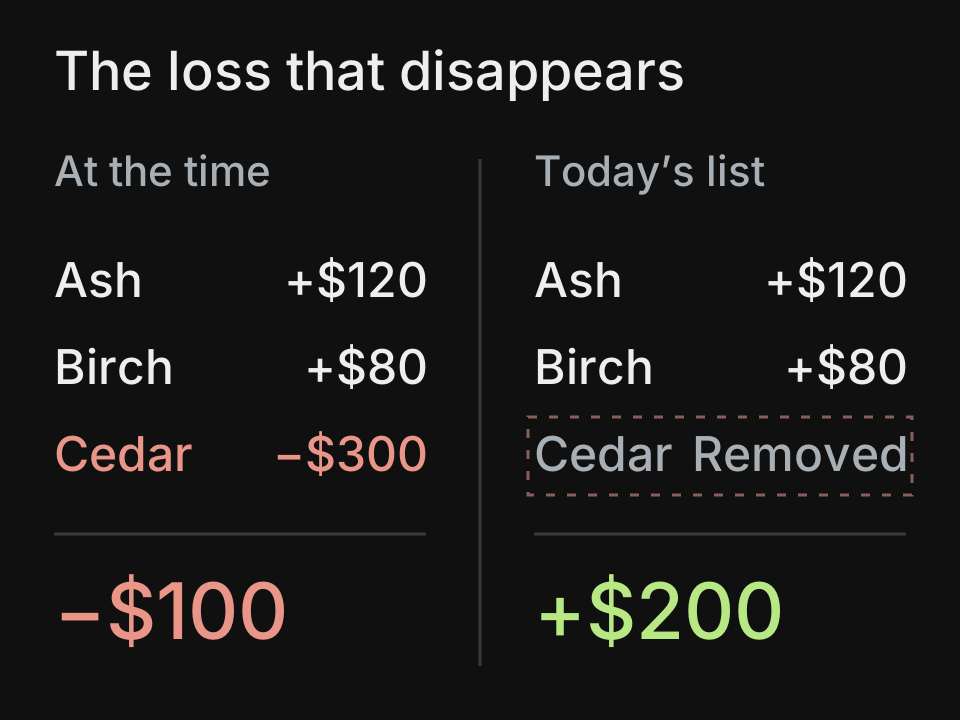
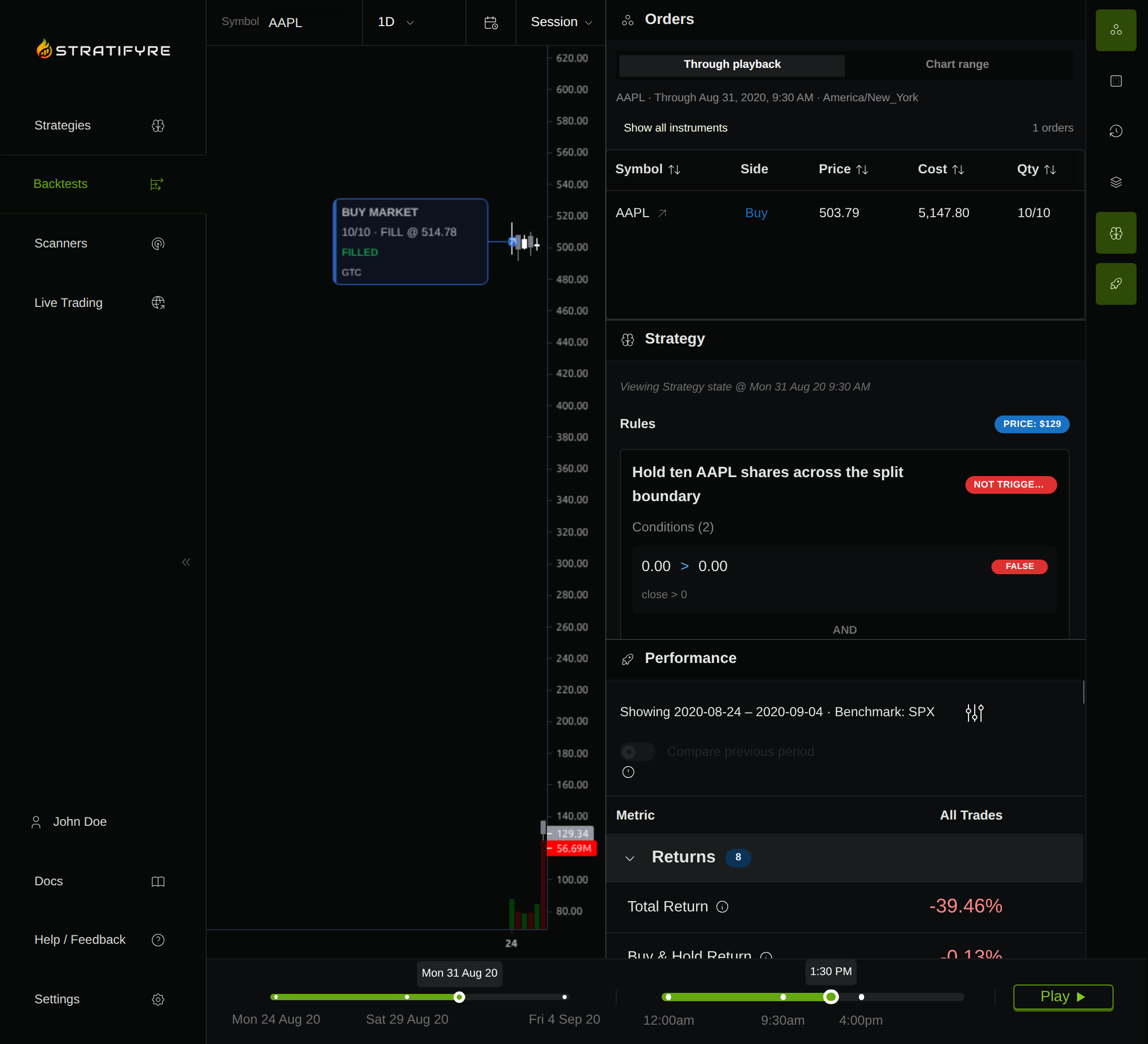
Read article →Why splits, renames, membership removals, and mergers require coordinated changes to positions, orders, lots, quotes, and strategy memory.
Read article →The engineering behind dated index membership, instrument identity, coverage checks, and reproducible universe backtests.
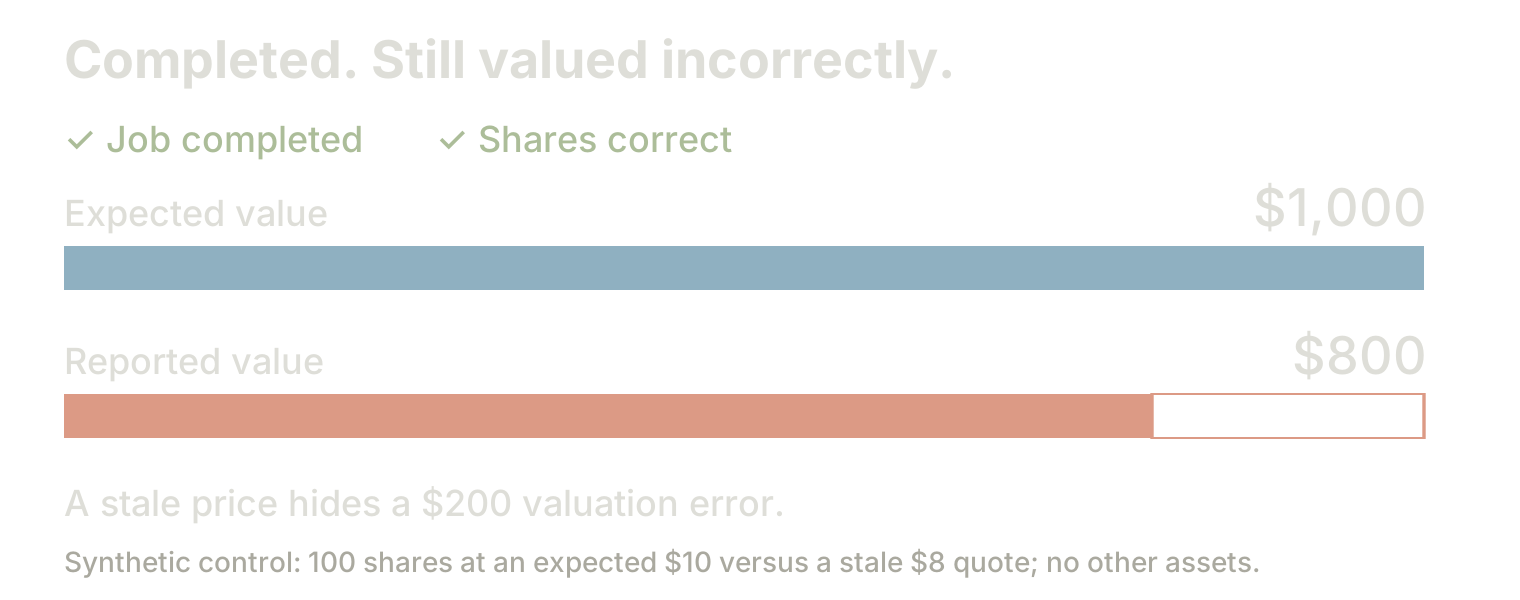
Read article →Independent financial controls, preserved failures, real reference corrections, and frozen reruns that test the complete backtesting path.
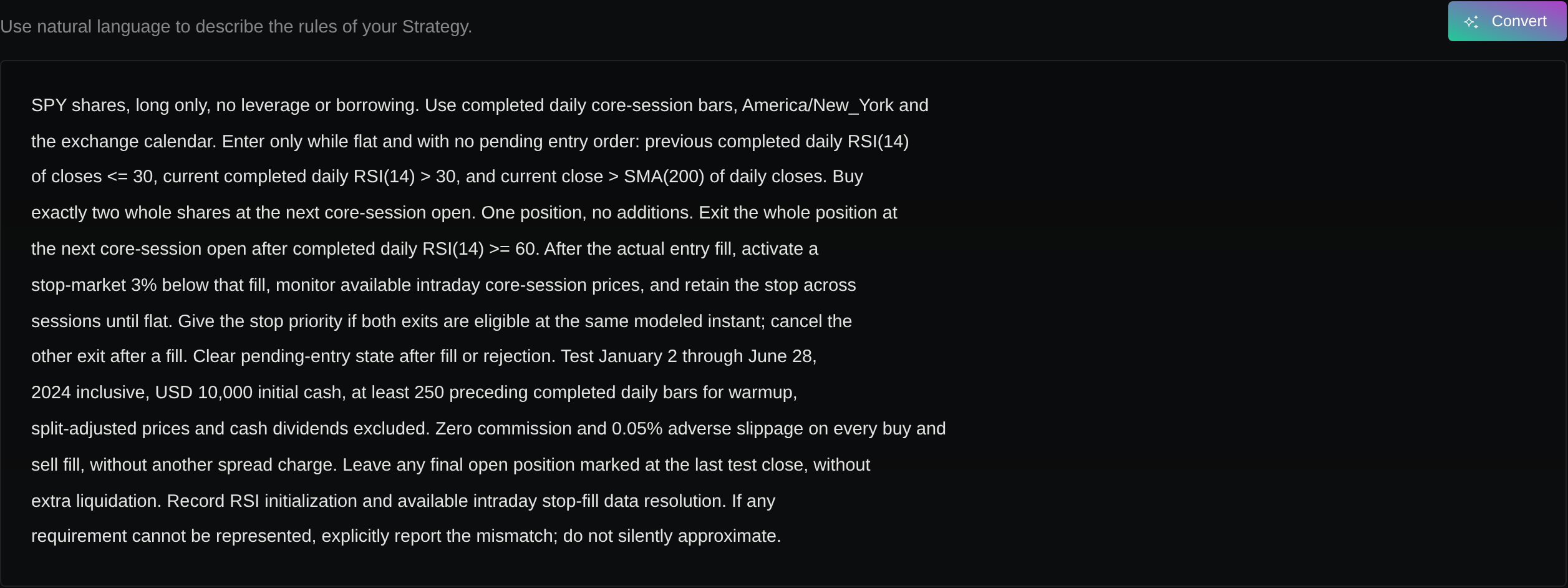
Read article →Replace vague trading instructions with precise entries, exits, sizing, and timing, then audit the generated rules and one historical trade.
Read article →Use an AI assistant and Stratifyre MCP to preserve rules, backtest IDs, trade evidence, and rejected hypotheses in one bounded research workflow.
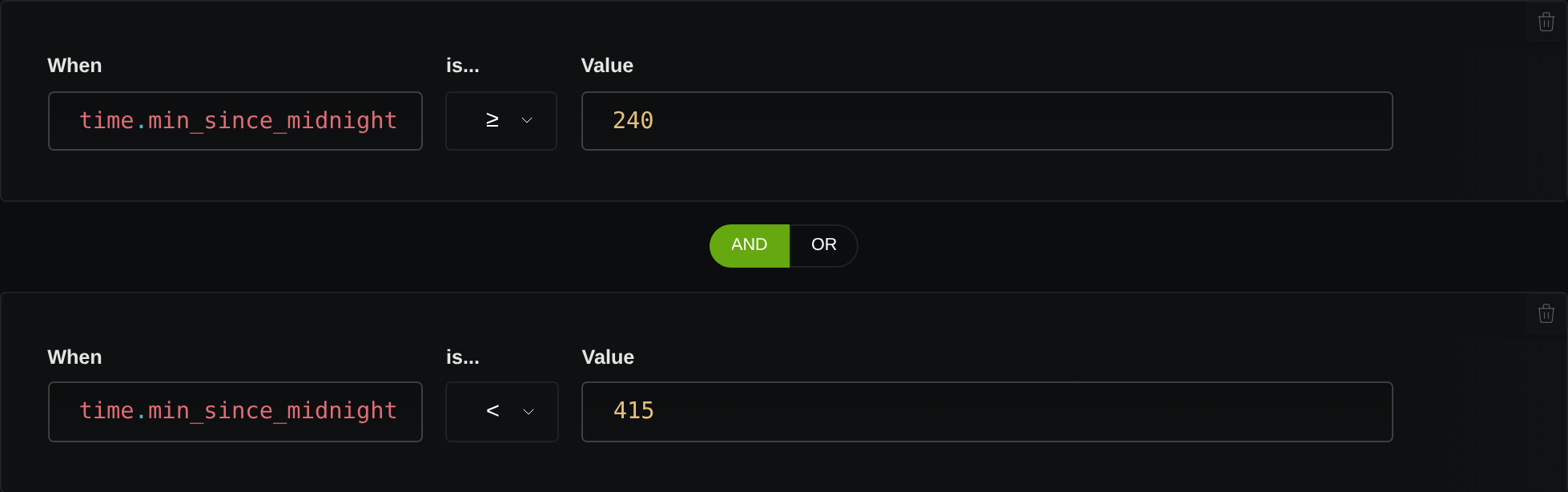
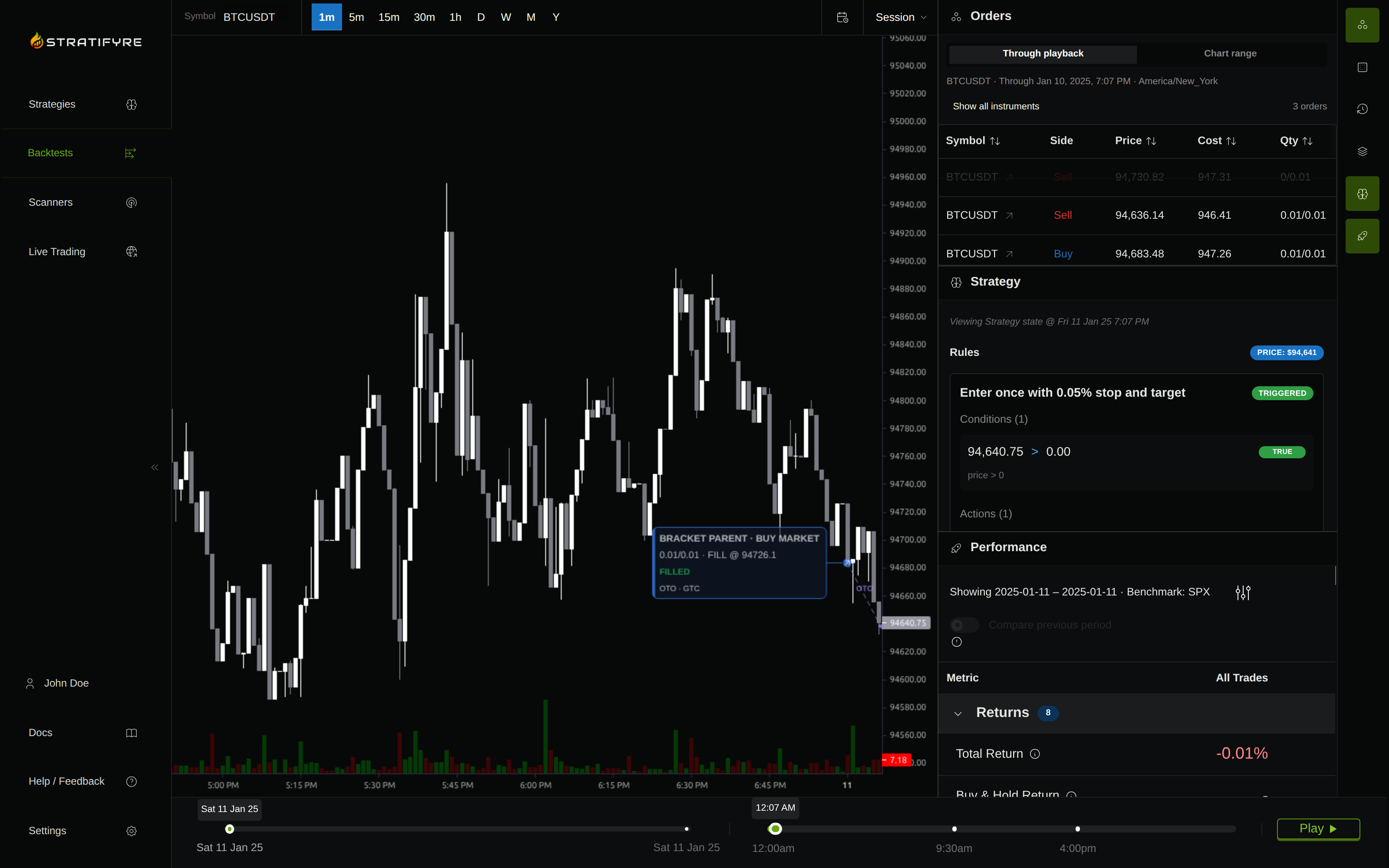
Read article →Model a three-hour confirmation window with no-code state rules, then inspect why a setup entered, expired, or exited in a real backtest.
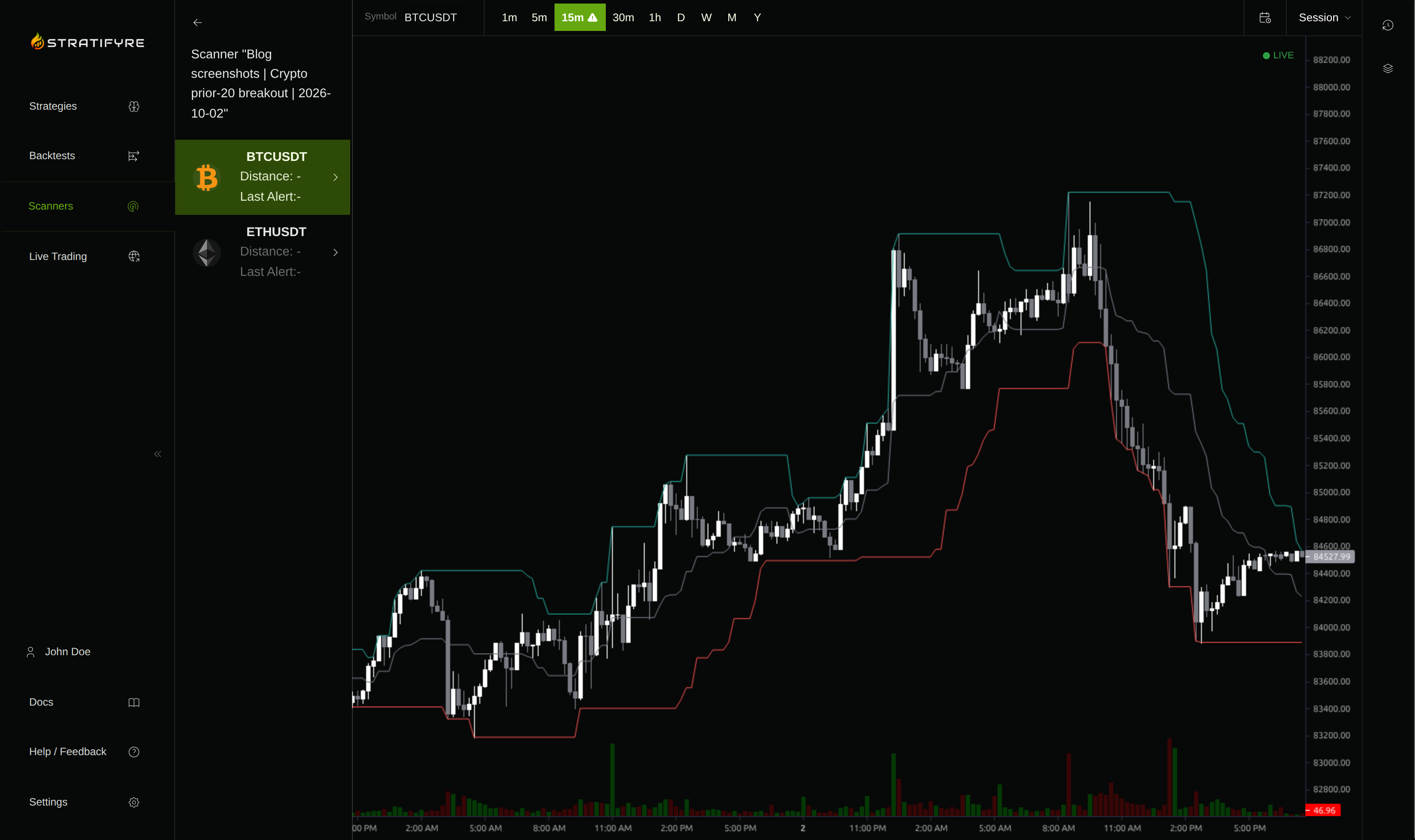
Read article →Define a prior-channel breakout, choose venue-specific pairs, and make scanner matches a manageable review queue.
Read article →Check signals, order handling, market-data timing, recovery, and risk limits before treating a paper trading result as operational evidence.
Read article →Find the earliest defensible difference in inputs, decisions, orders or fills—and recognize when a backtest and simulated session cannot yet be compared.
Read article →Fix your strategy assumptions, vary execution costs, and find the range where net profit disappears without mistaking a scenario for a fill forecast.
Read article →Turn an ETH band breakout into explicit entry and exit rules, compare nearby settings, and inspect the false breakouts that a headline return can hide.
Read article →Design an alert that explains the market, rule, and next check; distinguish saved scanner conditions, recorded triggers, and actual notification receipts.
Read article →Separate position allocation from planned loss at a stop, calculate shares and contracts correctly, and compare sizing policies without confusing size with entry quality.
Read article →Build a timestamped perpetual funding ledger, keep leverage and notional separate, and audit which costs a spot backtest actually accounts for.
Read article →Define two gold-futures entry windows, control costs and overnight exposure, and check whether a session restriction survives later data.
Read article →Avoid carrying today's S&P 500 stock list into the past: check membership dates, delisted data, and what your strategy could have known.
Read article →Audit a five-minute entry with an hourly filter by checking completed candles, source coverage, and actual fill timestamps before comparing returns.
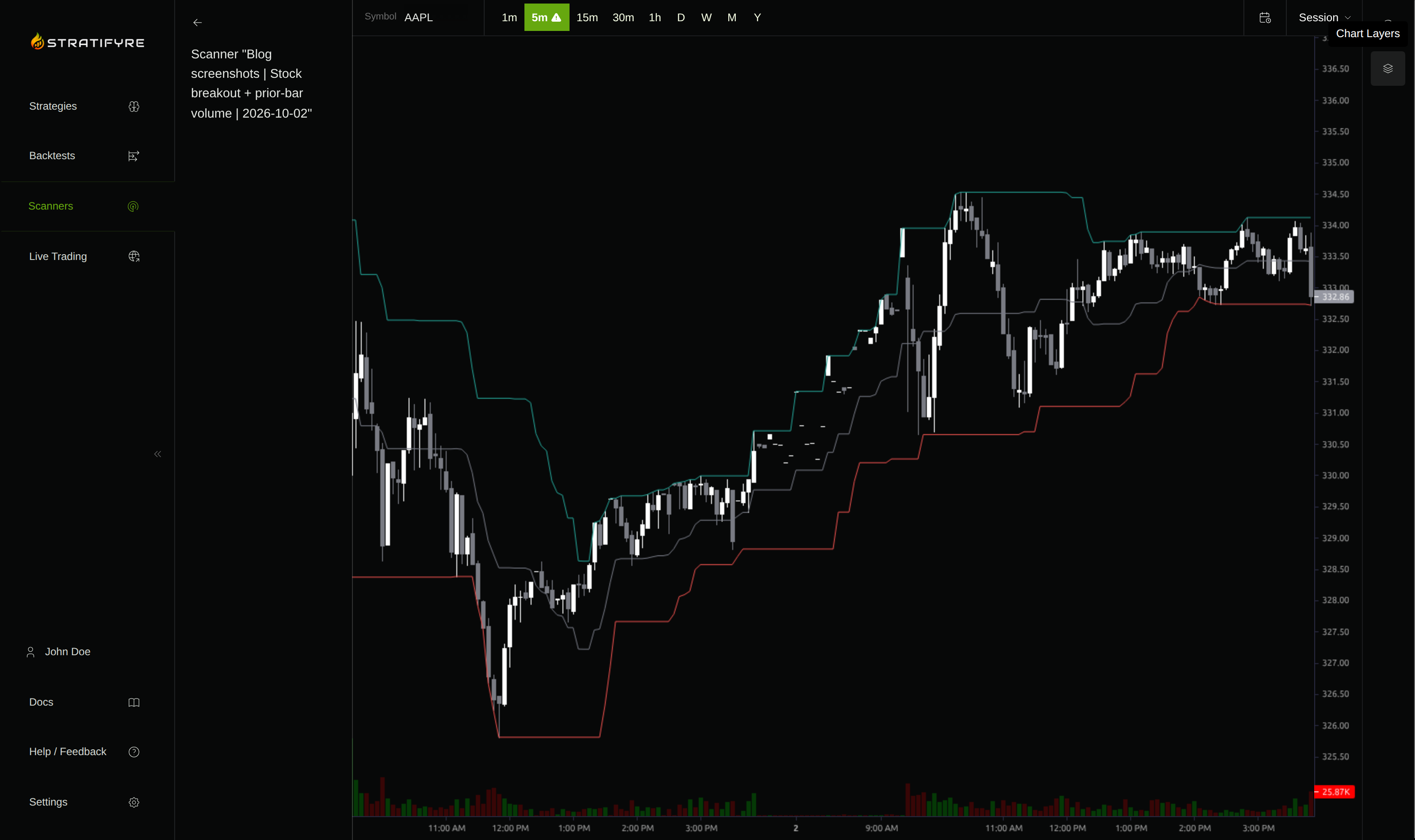
Read article →Define the breakout, volume baseline, session, and alert timing so your stock scanner answers one precise question.
Read article →Separate indicator history, entry windows, order fills, and overnight exposure before comparing stock backtests.
Read article →Compare one unchanged strategy across conditions known at entry, using explicit volatility labels, real trade counts, and careful timing.
Read article →Choose strategy settings on earlier data, test them on the next window, and combine the results without double-counting dates or confusing capital with position carry.
Read article →Define a small neighborhood around one strategy, diagnose fragile settings, and keep sensitivity checks separate from untouched test data.
Read article →Compare documented workflows in Stratifyre, TrendSpider, Composer, and TradingView, then use a saved-rule and trade audit to evaluate your own strategy.
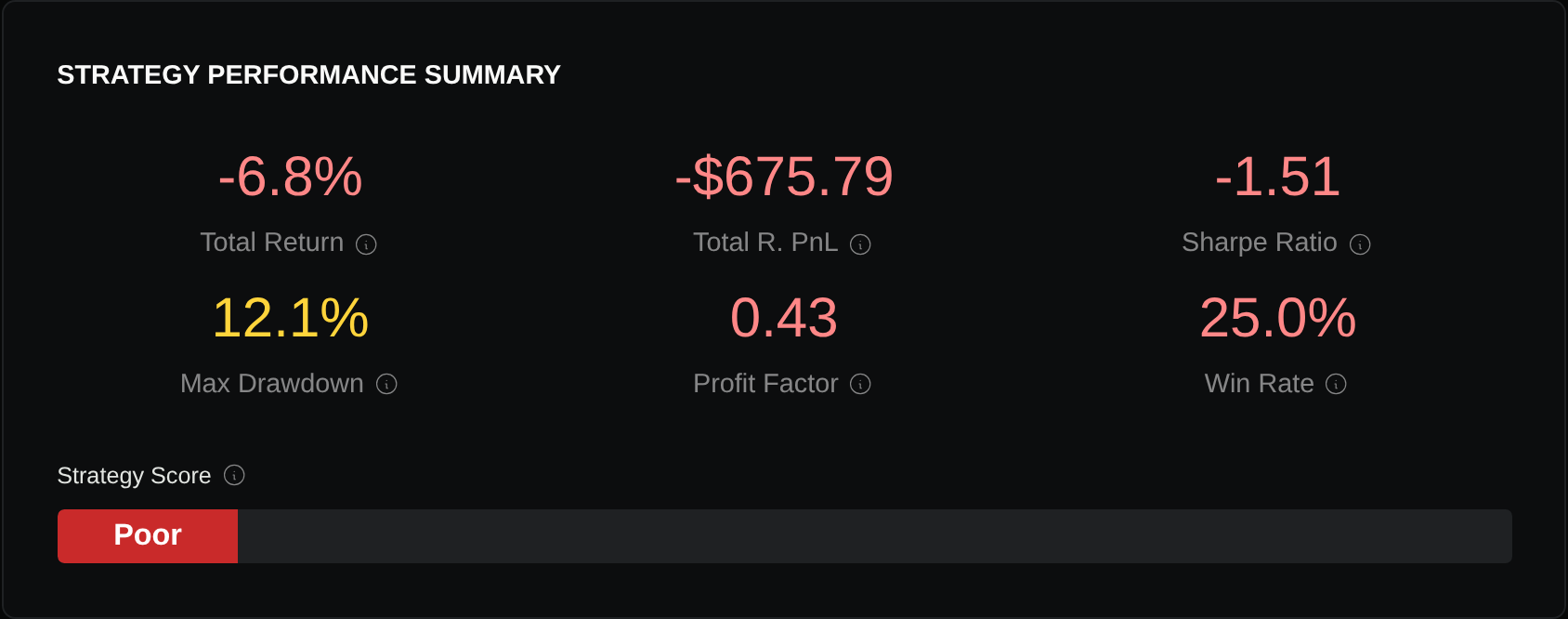
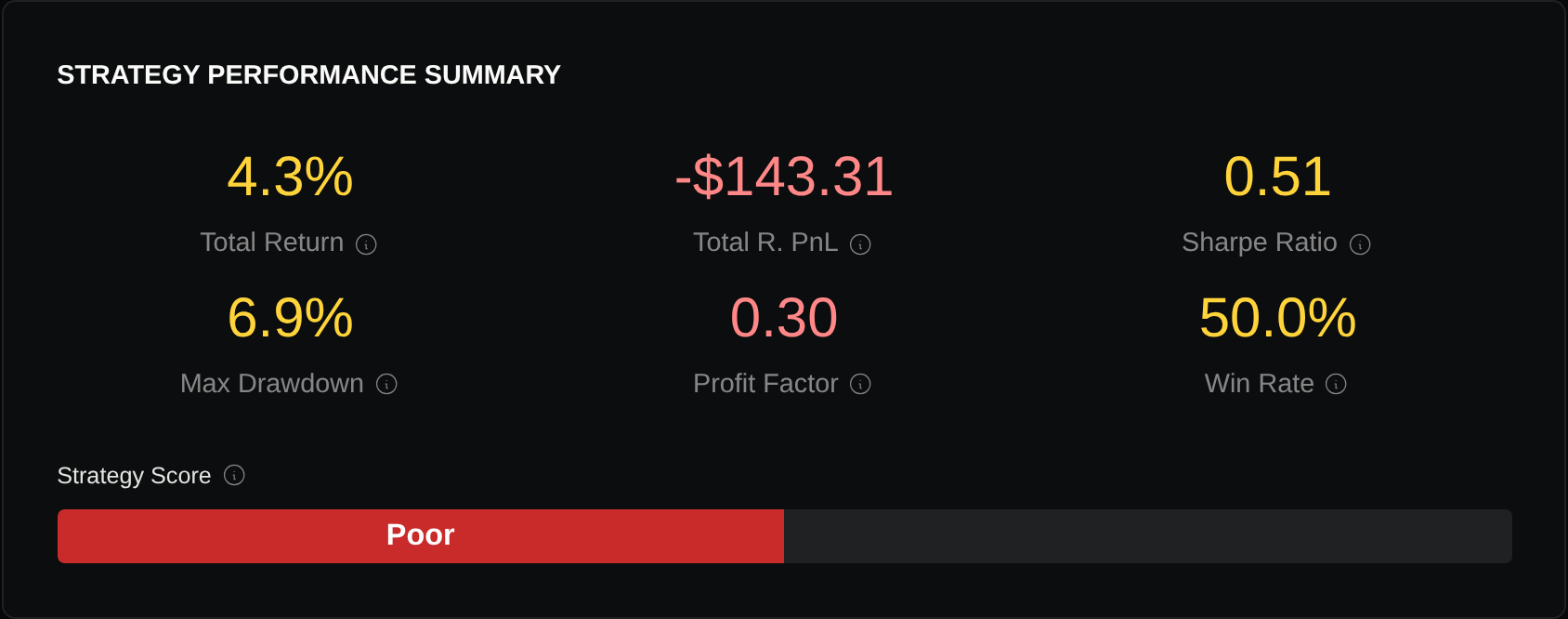
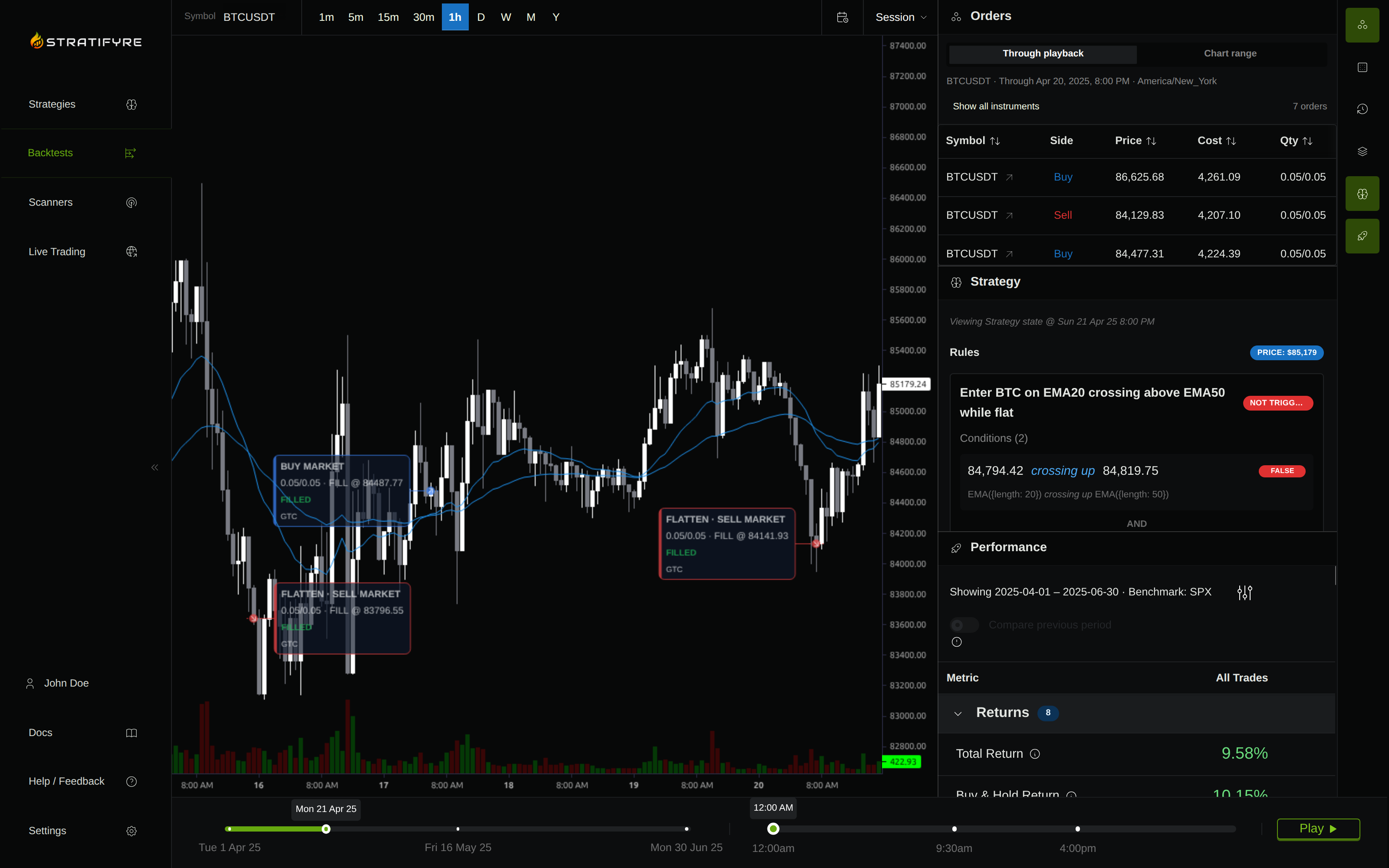
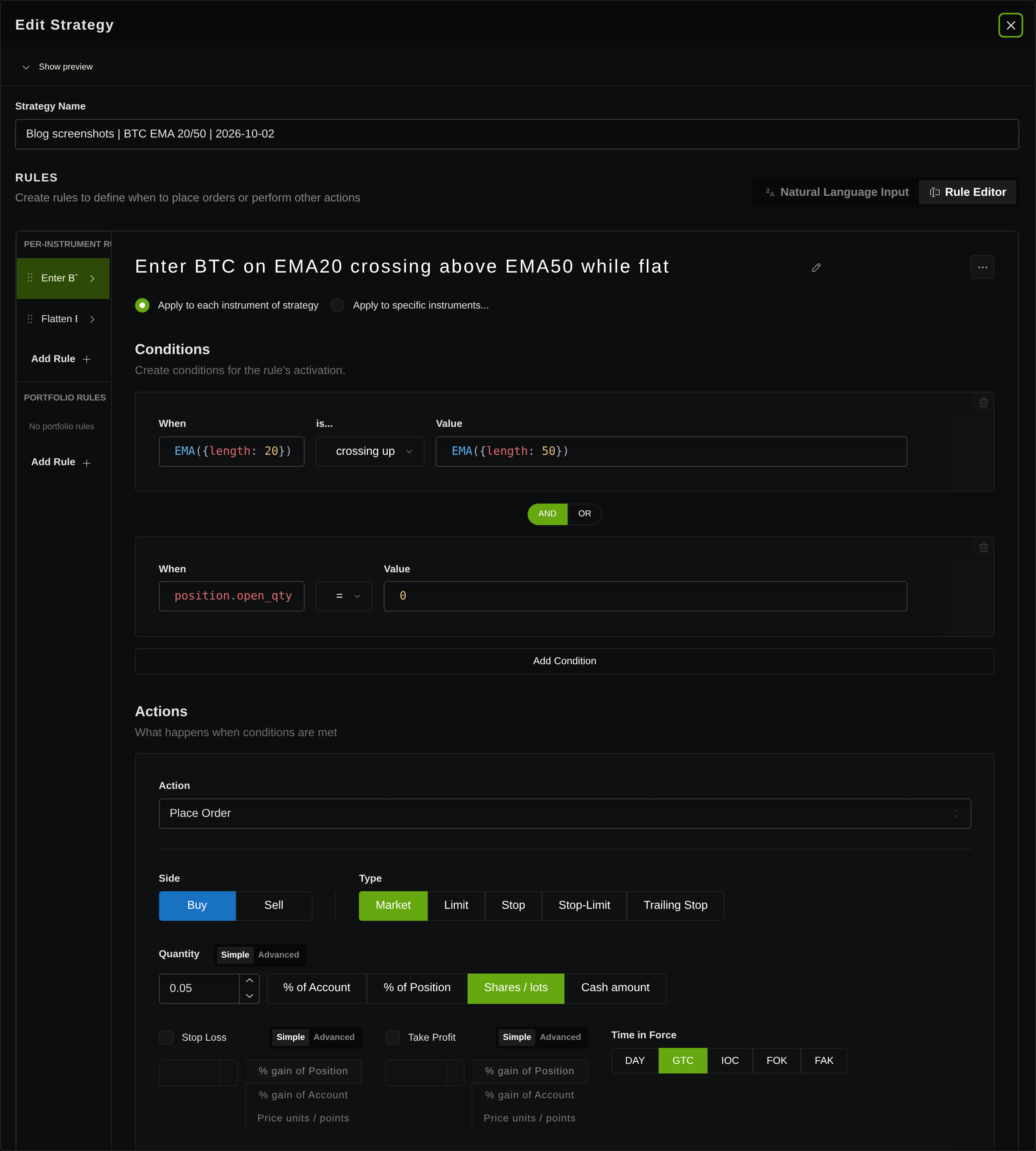
Read article →A real Bitcoin EMA crossover backtest: the saved rules, 24 trades, a losing account result, and the cost checks to make before trusting it.
Read article →Count parameter combinations, compare searches at a matched trial budget, and separate historical candidate selection from later validation.
Read article →Check the active loss floor against marked account equity. Learn why profitable closing trades and a low drawdown report cannot prove prop-evaluation compliance.
Read article →Define a completed cash-open range, one daily entry, false-breakout exits, and contract costs before judging an ES opening-range backtest.
Read article →Convert Nasdaq futures stops into dollars, compare equal contract counts with matched stop risk, and account for rounding and costs.
Read article →Align trading losses before combining strategies, then check simultaneous positions, idle cash, sizing, and a real SPY–QQQ shared account.
Read article →Find which trades, instruments, and periods made your backtest profitable—and distinguish a concentration diagnostic from a new portfolio simulation.
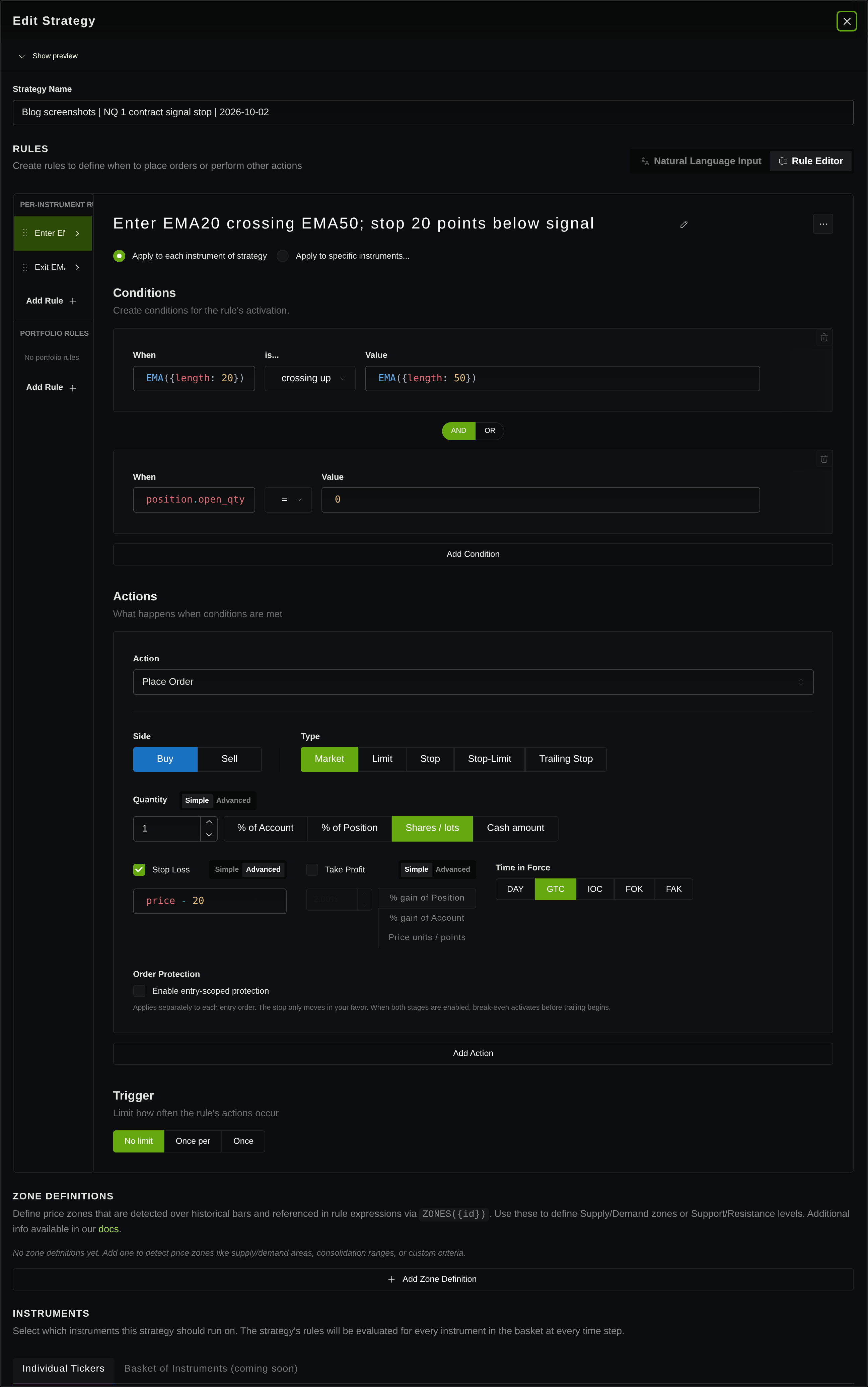
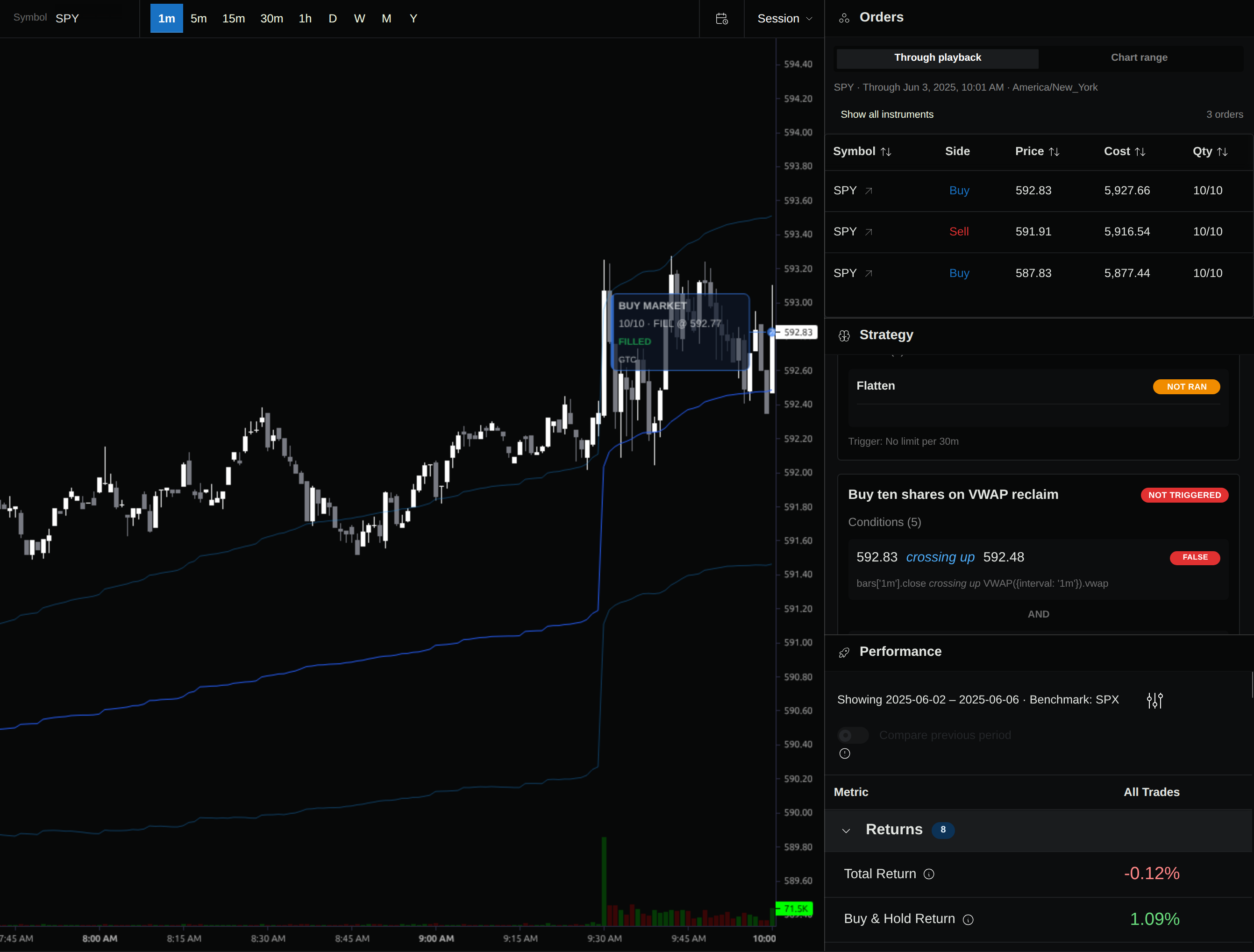
Read article →Define a VWAP reclaim with explicit session, exit, and sizing rules, then inspect a real SPY backtest's losing trade and unresolved fill timing.
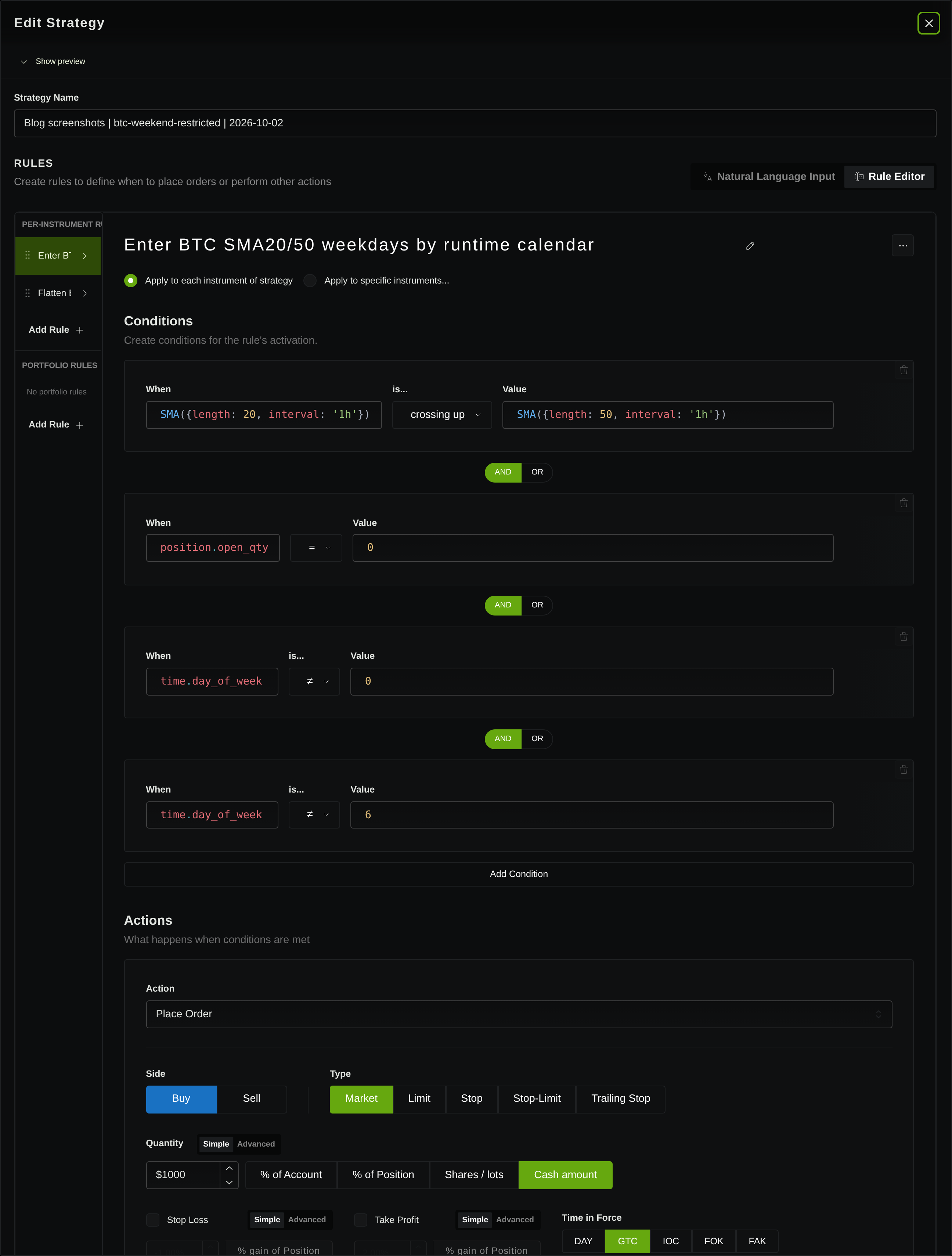
Read article →Test a weekday-only entry rule without confusing weekend entries, weekend exits, and the risk of holding Bitcoin through Saturday and Sunday.
Read article →Diagnose intraday fill differences by separating candle detail, signal timing, and fill assumptions before trusting a finer backtest.
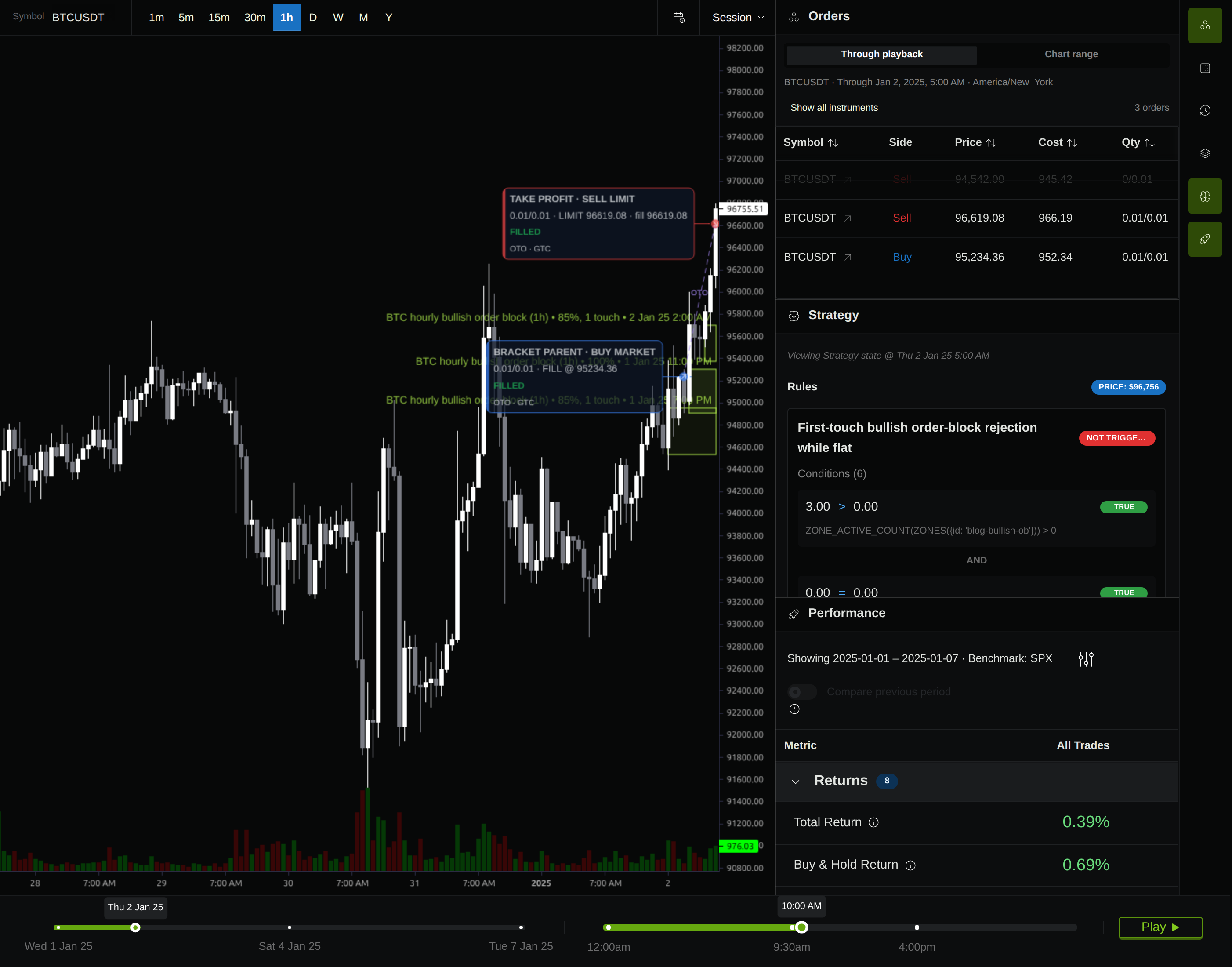
Read article →Define an order block’s formation, bounds, and invalidation, then inspect a real hourly Bitcoin retest, its confirmation timing, and a failed trade.
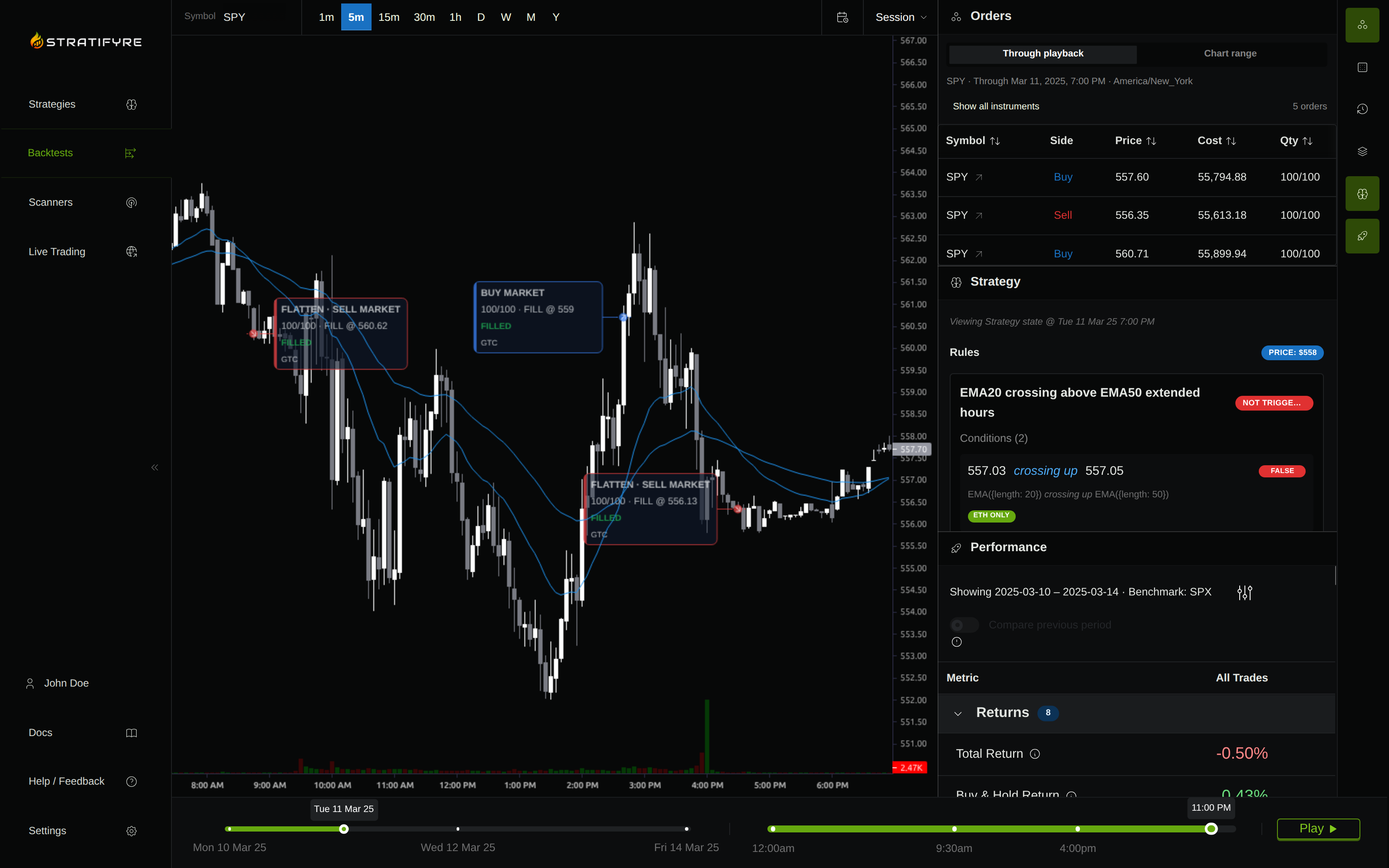
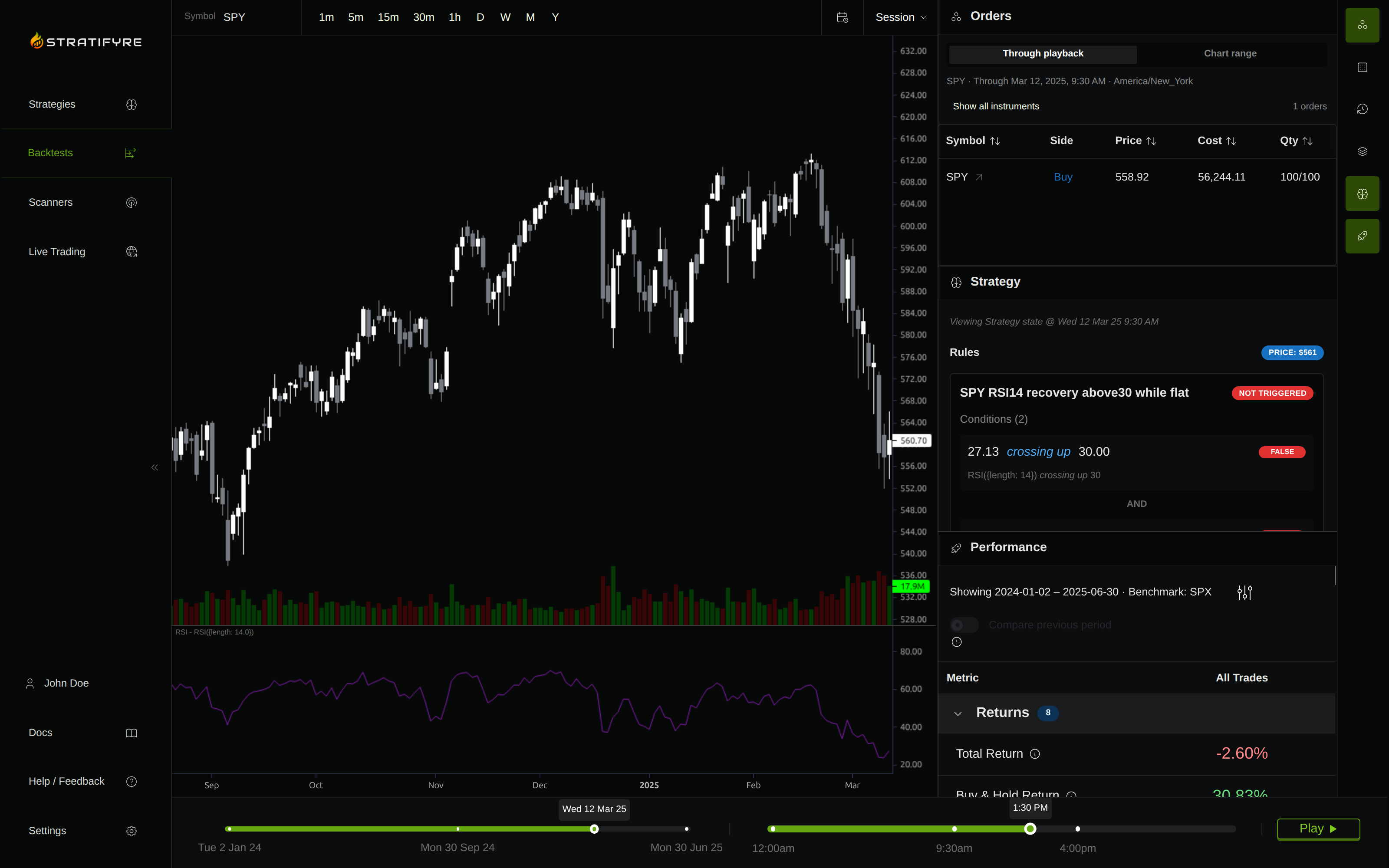
Read article →Separate oversold readings from recovery signals, define next-session execution, and compare an SPY RSI rule with a consistent buy-and-hold baseline.
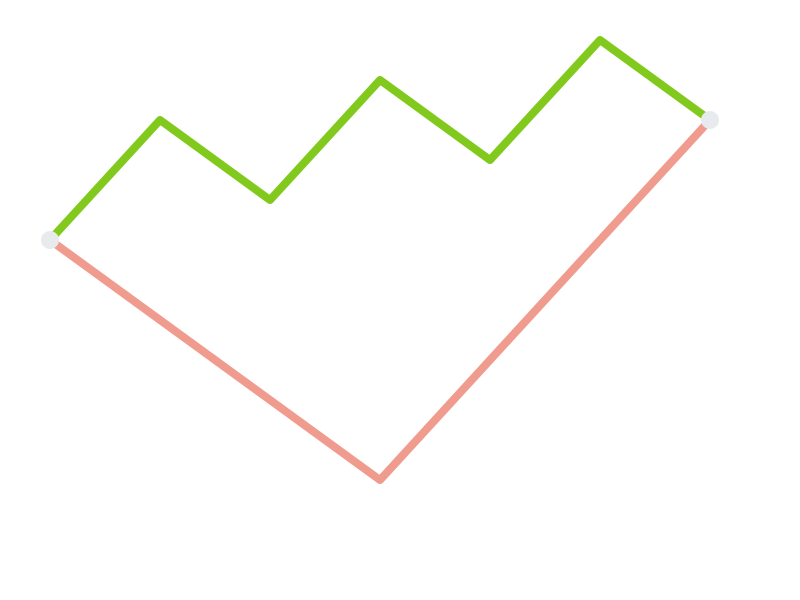
Read article →Shuffle an executed trade list to inspect losing streaks and drawdown, compare bootstrap methods, and separate conditional scenarios from forecasts.
Read article →Separate continuous futures signals from tradable contracts, roll-gap adjustments, and the fills and costs needed to calculate rollover P&L.
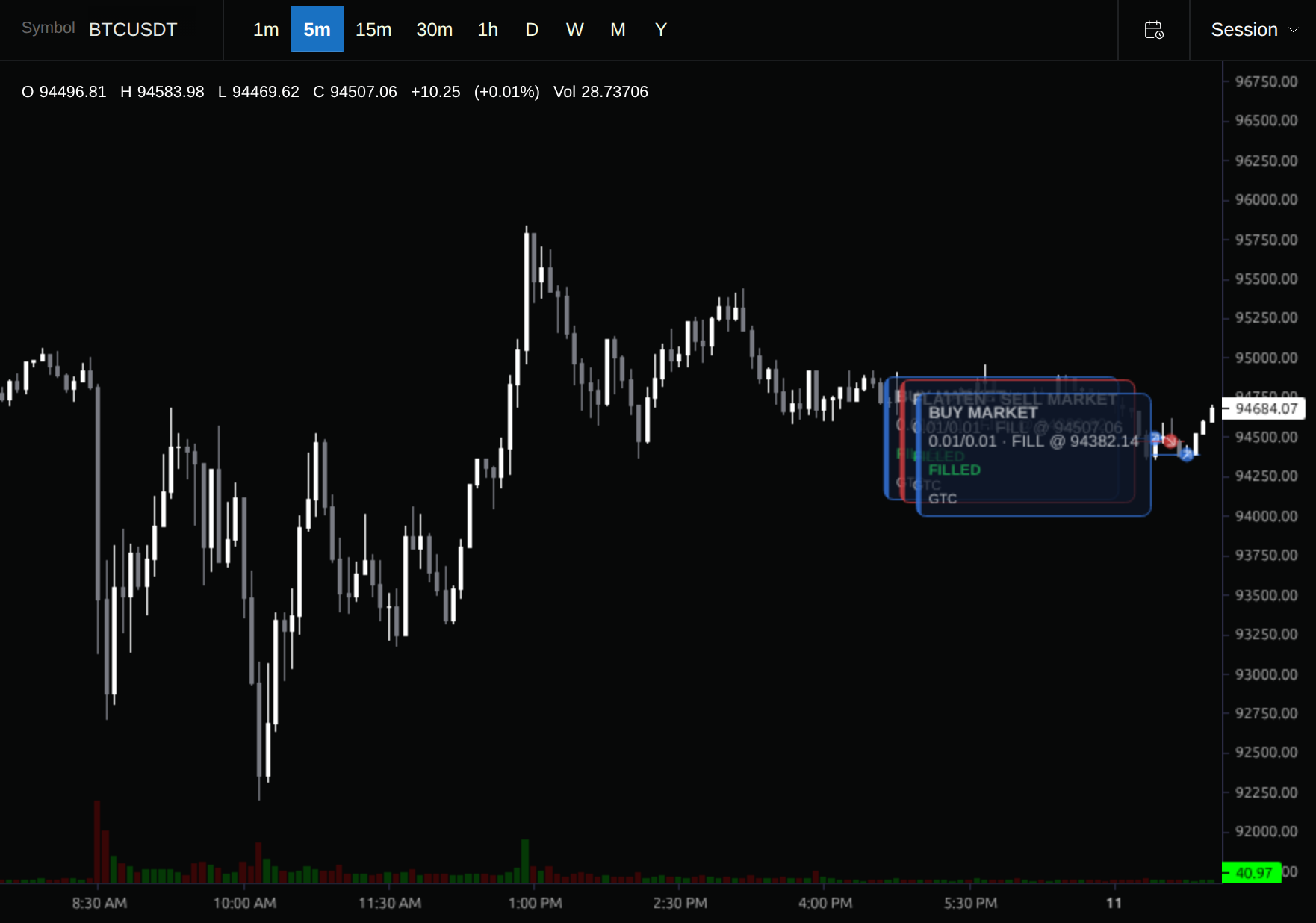
Read article →Calculate a spot trade's break-even move, distinguish maker and taker fills, and check fees, spread, slippage, and turnover before trusting net results.
Read article →Keep a moving-average rule fixed across three ETFs, then compare drawdowns, time invested, trading costs, distributions, and idle cash.
Read article →Reconcile winning and losing trades, costs and dollar expectancy with a real Bitcoin backtest—and see why an 80% win rate can still produce a loss.
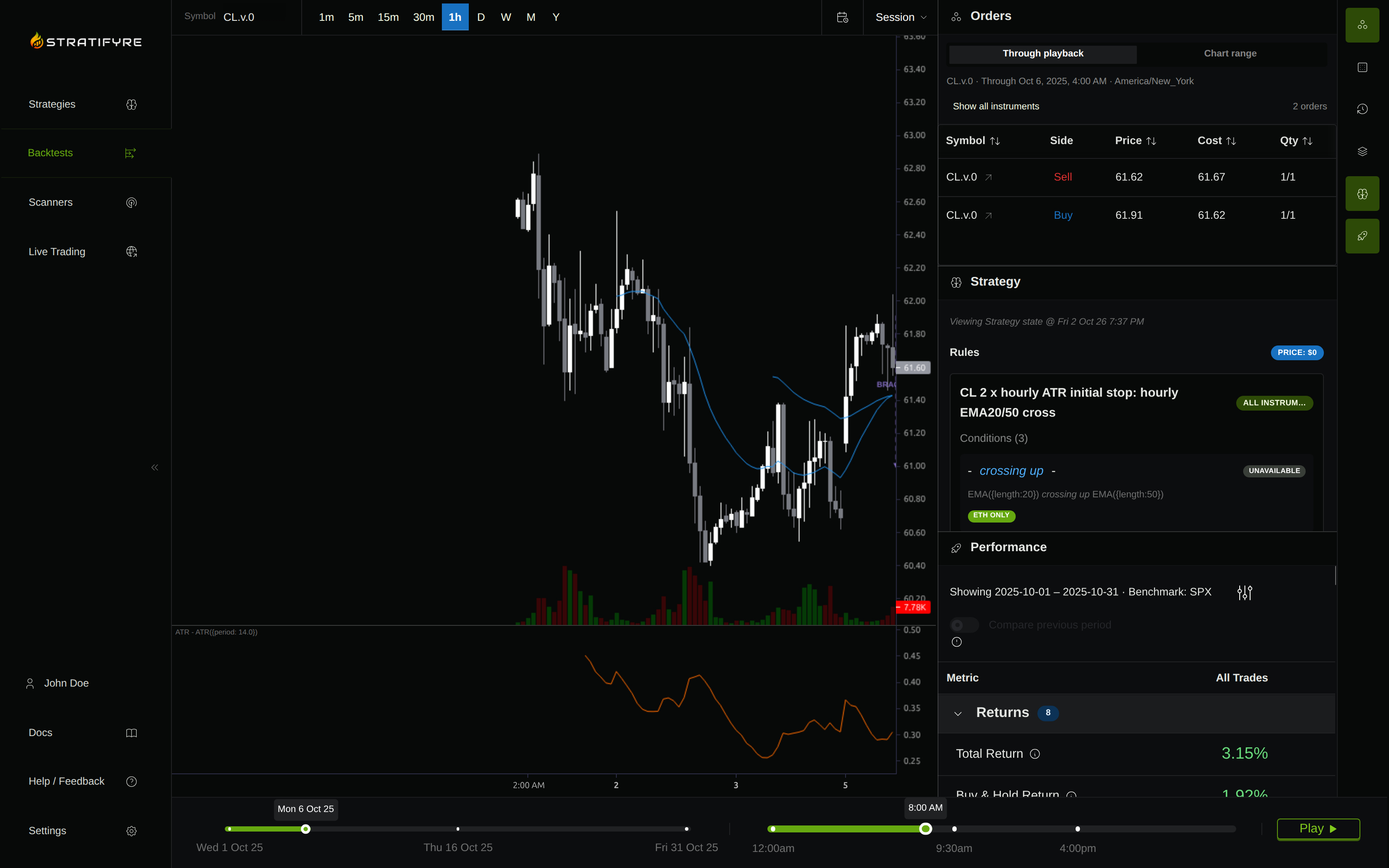
Read article →Compare a fixed crude-oil stop with an ATR-based initial stop, freeze the entry rules, and translate price distance into CL or MCL contract risk.
Read article →Define a small first backtest, save its assumptions, inspect the report and one trade, then choose the next check using a real Bitcoin example.
Read article →Diagnose artificial stock-price gaps, keep signals and fills on consistent scales, and count dividend cash once.
Read article →